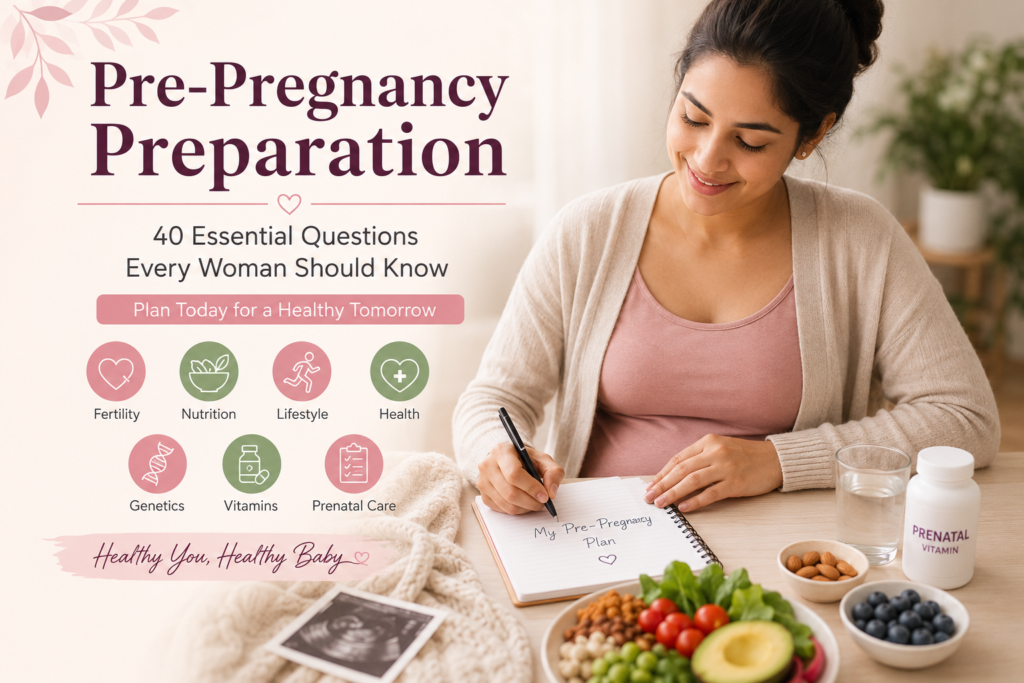
Women planning a pregnancy ask questions about fertility, health, nutrition, lifestyle, genetics, and prenatal preparation because they want to improve their chances of conceiving, support a healthy pregnancy, reduce complications, and provide the healthiest possible start for their baby. Seeking guidance before conception allows healthcare providers to identify potential risks early, optimize maternal health, and create a personalized plan for a safe pregnancy and healthy birth.
Below is a comprehensive list of the most frequently asked questions, along with brief, evidence-based answers.
1. When should I start preparing for pregnancy?
Answer: Ideally, begin preparing at least 3 months before trying to conceive. This gives time to optimize your health, nutrition, and lifestyle.
2. Should I see a doctor before trying to conceive?
Answer: Yes. A preconception check-up helps review your medical history, medications, vaccinations, and any conditions that may affect pregnancy.
3. What vitamins should I take before pregnancy?
Answer: Most women should start a prenatal vitamin containing:
- Folic acid (400–800 mcg daily)
- Vitamin D
- Iodine
- Iron (if recommended)
- DHA (optional but beneficial)
4. Why is folic acid so important?
Answer: Folic acid helps prevent neural tube defects such as spina bifida. Start taking it at least one month before conception.
5. How can I improve my fertility?
Answer:
- Eat a balanced diet
- Maintain a healthy weight
- Exercise regularly
- Sleep 7–9 hours
- Manage stress
- Avoid smoking and excessive alcohol
6. When am I most fertile?
Answer: The fertile window is usually the 5 days before ovulation and the day of ovulation.
7. How do I know when I ovulate?
Answer:
- Track your menstrual cycle
- Use ovulation predictor kits
- Monitor cervical mucus
- Track basal body temperature
8. How often should we have intercourse when trying to conceive?
Answer: Every 1–2 days during the fertile window offers the best chance of pregnancy.
9. Does age affect fertility?
Answer: Yes. Female fertility gradually declines after age 30 and more significantly after 35.
10. What is the ideal age to get pregnant?
Answer: Biologically, fertility is generally highest in the 20s and early 30s, but many women have healthy pregnancies later with appropriate medical care.
11. Should my partner also prepare?
Answer: Absolutely. Male fertility contributes significantly to conception. Healthy habits improve sperm quality.
12. What foods increase fertility?
Answer:
- Fruits and vegetables
- Whole grains
- Nuts and seeds
- Lean protein
- Healthy fats
- Dairy (in moderation)
13. Which foods should I avoid?
Answer:
- Raw seafood
- Excessive caffeine
- Alcohol
- High-mercury fish
- Unpasteurized dairy
- Processed foods
14. Can I drink coffee?
Answer: Moderate caffeine intake (generally under 200 mg/day) is considered acceptable while trying to conceive.
15. Should I stop drinking alcohol?
Answer: Yes. It’s safest to avoid alcohol once trying to conceive, as pregnancy may occur before you know it.
16. Can smoking affect fertility?
Answer: Yes. Smoking reduces fertility and increases pregnancy complications.
17. Does weight matter?
Answer: Yes. Being significantly underweight or overweight can affect ovulation and pregnancy outcomes.
18. Can stress prevent pregnancy?
Answer: Stress alone is unlikely to cause infertility, but managing stress supports overall well-being and healthy habits.
19. What medical conditions should be controlled before pregnancy?
Answer:
- Diabetes
- Thyroid disorders
- High blood pressure
- PCOS
- Epilepsy
- Autoimmune diseases
20. Are my current medications safe?
Answer: Not all medications are safe in pregnancy. Consult your healthcare provider before stopping or changing any prescription medicine.
21. Which vaccines should I have before pregnancy?
Answer: Ensure you’re up to date on vaccines such as rubella, varicella, hepatitis B, influenza, and COVID-19, as recommended.
22. Should I get any blood tests?
Answer: Your doctor may recommend blood tests for blood group, anemia, immunity, thyroid function, blood sugar, and infectious diseases based on your health history.
23. Should I get genetic testing?
Answer: It may be recommended if you or your partner have a family history of inherited conditions or belong to certain higher-risk populations.
24. What if my periods are irregular?
Answer: Irregular cycles can affect ovulation. A healthcare provider can help identify the cause and discuss treatment if needed.
25. I have PCOS. Can I still get pregnant?
Answer: Yes. Many women with PCOS conceive naturally or with medical support.
26. How long does it usually take to get pregnant?
Answer: Most healthy couples conceive within one year of regular unprotected intercourse.
27. When should I seek fertility help?
Answer:
- Under 35: after 12 months of trying
- 35 or older: after 6 months
- Earlier if you have known fertility concerns
28. Does exercise help fertility?
Answer: Moderate exercise supports fertility. Avoid excessive, high-intensity exercise unless advised otherwise.
29. Should I lose weight before pregnancy?
Answer: If you’re overweight, even modest weight loss can improve fertility and reduce pregnancy risks.
30. Can dental health affect pregnancy?
Answer: Yes. Healthy gums and teeth are associated with better pregnancy outcomes. A dental check-up before pregnancy is a good idea.
31. Is it safe to travel while trying to conceive?
Answer: Usually yes, provided you’re healthy and follow routine travel precautions.
32. Should I stop using skincare products?
Answer: Some ingredients, such as retinoids, should be avoided. Review your products with a healthcare professional if unsure.
33. Can I continue working?
Answer: Most women can. If your job involves radiation, toxic chemicals, heavy lifting, or infectious risks, discuss precautions with your employer and healthcare provider.
34. Should I stop birth control before trying?
Answer: Yes. Fertility may return immediately or take a few months, depending on the contraceptive method.
35. What is a healthy BMI before pregnancy?
Answer: A BMI between 18.5 and 24.9 is generally associated with lower pregnancy risks, though individual factors matter.
36. Does sleep affect fertility?
Answer: Good sleep supports hormone regulation and overall reproductive health.
37. Should I avoid environmental toxins?
Answer: Limit exposure to pesticides, lead, mercury, certain solvents, and unnecessary radiation whenever possible.
38. Can thyroid problems affect pregnancy?
Answer: Yes. Both underactive and overactive thyroid conditions can affect fertility and pregnancy and should be managed before conception.
39. What if I’ve had a miscarriage before?
Answer: Many women go on to have healthy pregnancies after a miscarriage. A preconception consultation can help address individual risk factors.
40. What are the signs that I might be pregnant?
Answer: A missed period, breast tenderness, nausea, fatigue, and frequent urination are common early signs, but a pregnancy test is needed to confirm.
Quick Pre-Pregnancy Checklist
✅ Schedule a preconception health check
✅ Start folic acid (400–800 mcg daily)
✅ Eat a nutritious, balanced diet
✅ Reach a healthy weight if possible
✅ Exercise regularly
✅ Stop smoking and avoid alcohol
✅ Review medications with your healthcare provider
✅ Update vaccinations if needed
✅ Track your menstrual cycle and ovulation
✅ Encourage your partner to adopt healthy lifestyle habits